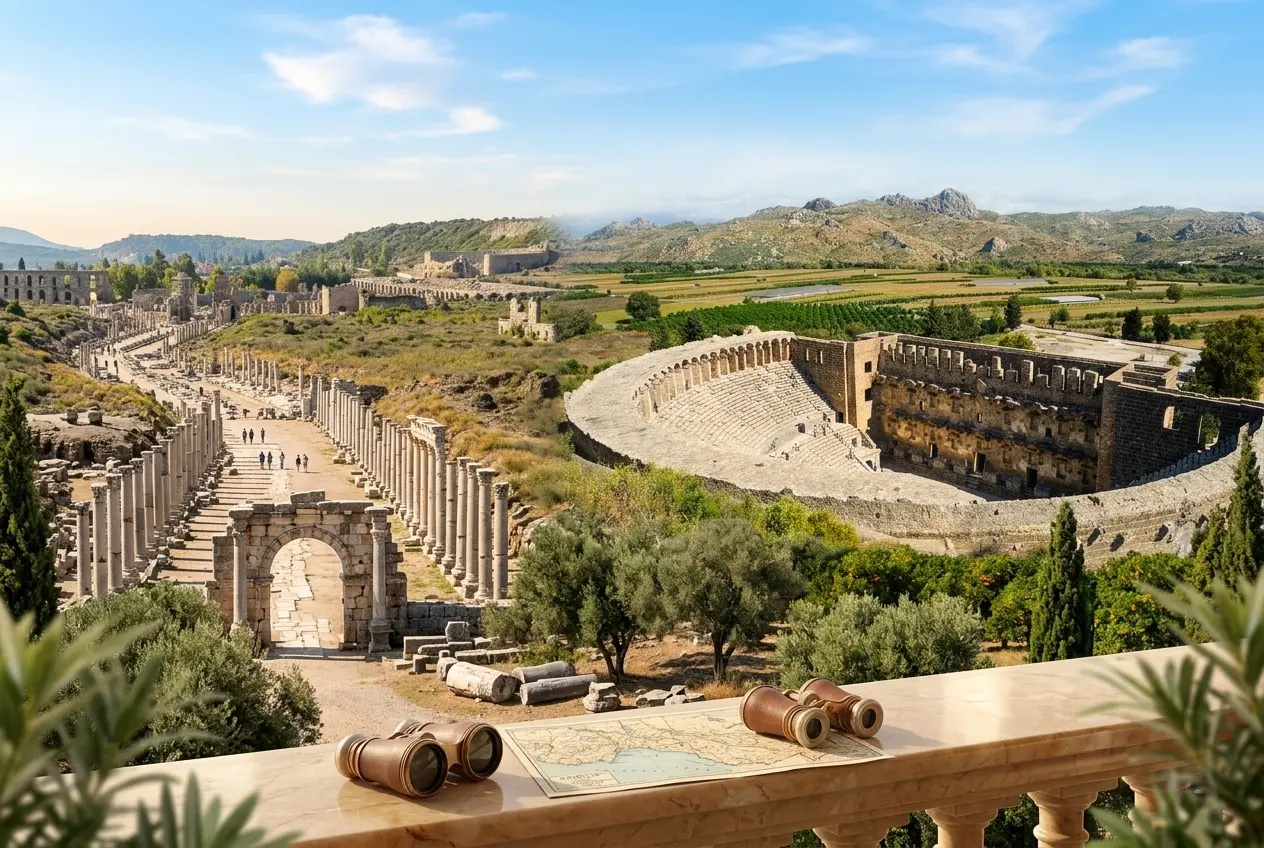
Antalya's Ancient Cities: A Journey Through Perge, Aspendos & Side
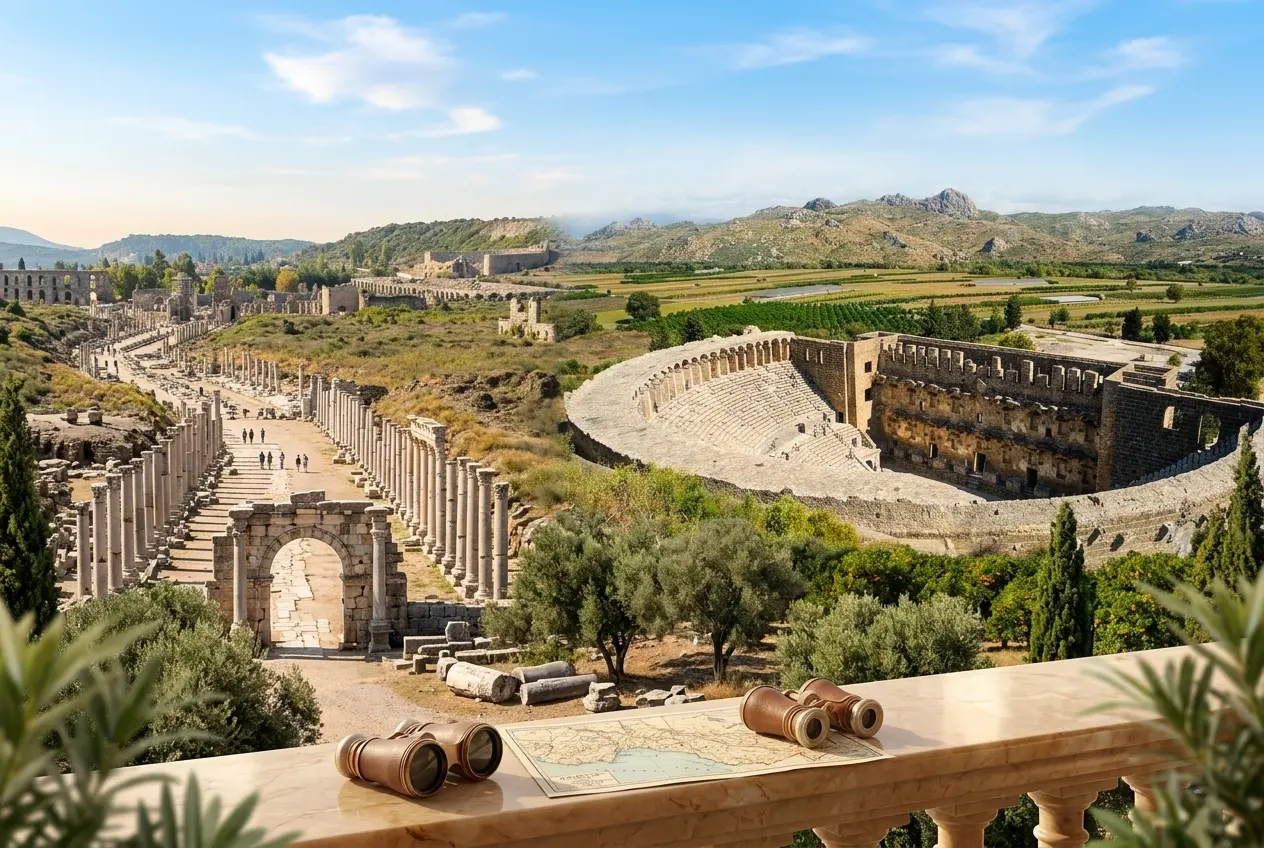
Antalya is renowned for its turquoise waters and golden beaches, yet the region's true treasure lies buried beneath millennia of history. The ancient cities Antalya harbours along its Mediterranean coastline stand as living monuments to the civilizations that once flourished here. Walk through the colonnaded streets of Perge and feel the grandeur of the Roman Empire; take a seat in the Aspendos Theatre and marvel at acoustics engineered over two thousand years ago. A holiday in this corner of Turkey is not merely sun and sea — it is a captivating journey through time.
In this guide, we explore Perge and Aspendos in depth — two of the most impressive historical sites Turkey has to offer — while also touching on the enchanting Side ancient city. We will also share practical tips on how to plan your accommodation so that you can combine culture, history, and a luxurious beach holiday seamlessly.
Perge: The Magnificent Capital of Pamphylia
Located just 18 kilometres from Antalya city centre, Perge was one of the largest and most important cities in the ancient region of Pamphylia. Its history stretches back to approximately 1500 BC, and the site was continuously inhabited from the Hittite era through the Hellenistic, Roman, and Byzantine periods. When Alexander the Great marched through Anatolia, Perge opened its gates without resistance. Under Roman rule, the city entered its golden age, becoming a thriving hub of trade, art, and public life.
Perge also holds a significant place in the history of Christianity. The Apostle Paul visited the city during his first missionary journey, making it one of the earliest crossroads of faith and culture in the ancient Mediterranean. Today, Perge sits on the UNESCO World Heritage tentative list and welcomes thousands of history enthusiasts every year.
Must-See Structures at Perge
Colonnaded Street (Cardo Maximus): The most iconic feature of Perge, this monumental avenue runs through the heart of the city. Flanked by marble columns on both sides, a water channel once carried cooling streams down its centre during the scorching summer months. The remains of shops lining the street reveal just how vibrant a commercial centre Perge once was.
The Stadium: With a capacity of 12,000 spectators, Perge's stadium is one of the best-preserved in all of Anatolia. Measuring 234 metres in length and 34 metres in width, its vaulted chambers beneath the seating rows once served as shops. From gladiator contests to athletic competitions, this structure is a vivid testament to Roman entertainment culture.
Roman Baths: Situated near the southern gate, the bath complex features the classic Roman layout — frigidarium (cold room), tepidarium (warm room), and caldarium (hot room). The remnants of the hypocaust underfloor heating system are still visible, offering a fascinating glimpse into ancient engineering.
Agora: This vast marketplace, measuring 76 by 76 metres, was the commercial and social heart of the city. Surrounded by colonnaded porticoes and shops, the agora also served as a gathering place for public debate and civic life.
Hellenistic Gate and Towers: The twin round towers at the southern entrance are among the most striking remnants from the Hellenistic period. Serving both a defensive and ceremonial purpose, these towers feature reliefs and ornamental carvings that reflect the artistic sensibilities of the era.
Visitor Tip: We recommend visiting Perge early in the morning, especially during summer when the midday heat can be intense. Allow at least 2–3 hours for your visit, wear comfortable walking shoes, and bring plenty of water. The site is large and open with limited shade, so sunscreen and a hat are essential.
Aspendos: Home to the World's Best-Preserved Ancient Theatre
Aspendos lies 47 kilometres from Antalya centre and just 7 kilometres from the town of Serik. While its history reaches back to the 5th century BC, what has made Aspendos world-famous is its extraordinary Roman theatre — a structure that has survived nearly two millennia in almost perfect condition. For anyone planning a Perge Aspendos tour, this is the undeniable highlight.
Aspendos Theatre: A Miracle of Acoustics
Built in the 2nd century AD by the architect Zenon during the reign of Emperor Marcus Aurelius, the Aspendos Theatre could seat between 15,000 and 20,000 spectators. Its most remarkable feature is its unparalleled acoustics. A sentence spoken in a normal tone at the centre of the stage can be heard clearly from the very top row. This acoustic perfection is proof of how advanced ancient engineering truly was.
The stage building (scaenae frons) has largely retained its original height. Its two-storey facade is adorned with columns, niches, and relief carvings. The orchestra pit, seating rows, and backstage rooms are all in an extraordinary state of preservation. During the Seljuk period, Sultan Alaeddin Keykubad used the theatre as a palace, which contributed significantly to its survival through the centuries.
Aspendos International Opera and Ballet Festival
Each summer, the Aspendos International Opera and Ballet Festival brings this ancient stage back to life. Leading opera and ballet companies from Turkey and around the world perform under the stars in this timeless venue. Watching an opera in a 2,000-year-old theatre beneath a canopy of stars is one of the most unforgettable experiences a holiday in Antalya can offer. The festival programme typically runs from June through September.
The Köprüçay Aqueduct
Aspendos is not only about its theatre. The aqueduct spanning the Köprüçay River (known in antiquity as the Eurymedon) once stretched approximately 15 kilometres, making it one of the longest water supply systems in the ancient world. This engineering marvel channelled water from the northern mountains to meet the city's needs. Several sections of the aqueduct still stand today and provide stunning photographic opportunities against the Anatolian landscape.
Perge vs. Aspendos: Which Should You Visit?
Both ancient cities deliver unique experiences, yet they cater to different interests. Perge is a sprawling urban ruin — ideal for visitors who want to see a stadium, agora, colonnaded street, and baths all within a single site. If you enjoy using your imagination to reconstruct an entire ancient city, Perge offers that canvas.
Aspendos, on the other hand, focuses on the sheer magnificence of a single structure. The theatre's state of preservation is so striking that time seems to have left it untouched. Architecture and acoustics enthusiasts will be utterly spellbound. If you happen to visit during summer and the festival schedule aligns, attending an opera or ballet performance is an absolute must.
Our recommendation? Visit both on the same day. Start with Perge in the early morning, then head to Aspendos in the afternoon. The drive between the two sites takes roughly 40 minutes, with Mediterranean scenery accompanying you along the way.
Practical Info: Perge and Aspendos require separate entrance tickets. The Museum Pass is valid at both sites. Allow 2–3 hours for Perge and 1–1.5 hours for Aspendos. Both sites have parking facilities, and small cafes are available near the entrances.
Side Ancient City: Where History Meets the Sea
No discussion of ancient cities in Antalya would be complete without Side. Founded in the 7th century BC, this former port city is unique in that it remains a living settlement to this day. The ancient theatre, Temple of Apollo, agora, and city walls are woven into the fabric of modern Side's streets and alleyways. The Side ancient city is not a fenced-off archaeological zone — it is a place where past and present coexist.
Side's greatest advantage is its ability to combine history with the sea. Watching the sunset at the Temple of Apollo and then dining at a harbourside restaurant is an experience that stays with you long after you return home. The Side Museum, housed in a former Roman bathhouse, displays a small but exquisite collection of artefacts unearthed in the region.
Staying within walking distance of Side Ancient City means you can immerse yourself in this historical atmosphere at any hour. Strolling through the ancient streets in the early morning before the crowds arrive, or gazing at the illuminated Temple of Apollo at night — these are privileges reserved for those who stay in Side.
Planning Your Ancient City Tour with Kirman Premium
The most strategic base for exploring Antalya's historical sites Turkey holiday seekers dream of is the Side and Manavgat area. From here, Perge is approximately 45 minutes away, Aspendos about 30 minutes, and Side Ancient City is within walking distance. Kirman Premium hotels provide the perfect base camp for combining culture and relaxation.
When planning your itinerary, we suggest scheduling your ancient city excursions on cooler days of the week. Head out early in the morning, return to the hotel by the afternoon, and enjoy the pool and beach for the rest of the day. Thanks to the all-inclusive concept, a sumptuous buffet or refined a la carte dining experience awaits you upon your return — the perfect way to cap off a day of exploration.
Sidemarin Kirman Premium stands out with its remarkable proximity to Side Ancient City — just a short walk away. With its family-friendly atmosphere and unbeatable location, it offers the ideal experience for both history lovers and families with children. After breakfast, a leisurely stroll of a few minutes will transport you back to ancient times.

Another excellent option in the Side area is Calyptus Kirman Premium. With its nostalgic tram, cinema hall, and vibrant entertainment programme, it adds a fun-filled dimension to your holiday while offering easy access to all the ancient cities. It serves as a superb base for day trips to Perge and Aspendos.

Practical Tips for Visiting Ancient Cities in Antalya
To make the most of your visits to Antalya's ancient cities, here are some practical recommendations that will enhance your comfort and enjoyment.
Best time to visit: April–May and September–October are the ideal months for exploring ancient ruins. Temperatures are comfortable, and tourist crowds are thinner compared to peak summer. If you visit during midsummer, always aim for the early morning hours.
Getting there: A rental car is the most practical way to reach both sites. Alternatively, your hotel reception can arrange day-tour excursions. Perge is accessible by public transport from central Antalya, but private transport is recommended for Aspendos.
What to bring: Comfortable walking shoes are essential — the terrain is uneven and stony. Sunscreen, a hat, plenty of water, and a camera are indispensable. Shade is limited at Perge, so sun protection should be a priority.
The guided tour advantage: Exploring ancient cities with a professional guide transforms the experience entirely. Learning the mythological tales, architectural details, and hidden stories behind the stones adds a depth that self-guided visits simply cannot match. Local guides share anecdotes and lesser-known facts that bring these ruins vividly to life.
Where History and Luxury Meet
Antalya is one of the rare destinations in the world where thousands of years of heritage blend seamlessly with a premium holiday experience. In the morning, you can breathe in the atmosphere of ancient Rome along Perge's colonnaded street. In the afternoon, you can test the legendary acoustics of the Aspendos Theatre. By evening, you can unwind on a Mediterranean-facing terrace at your hotel, reflecting on the wonders of the day.
Kirman Premium hotels stand out with their strategic locations and service quality, making this extraordinary combination possible. Whether you want to walk to Side Ancient City or organise day trips to Perge and Aspendos, the hotels' positions in the region grant you effortless access to all of Antalya's historical riches.
Do not limit your holiday to sun, sand, and sea alone. Discover the stories hidden in Antalya's soil for thousands of years, walk in the footsteps of ancient civilizations, and crown this extraordinary experience with the comfort of premium accommodation. The splendour of Perge, the acoustics of Aspendos, and the magic of Side await you.
-
 Arycanda Kirman Premium Receives the 2026 Otelpuan Award
 -
 The New Season Has Started at Kirman Premium!
 -
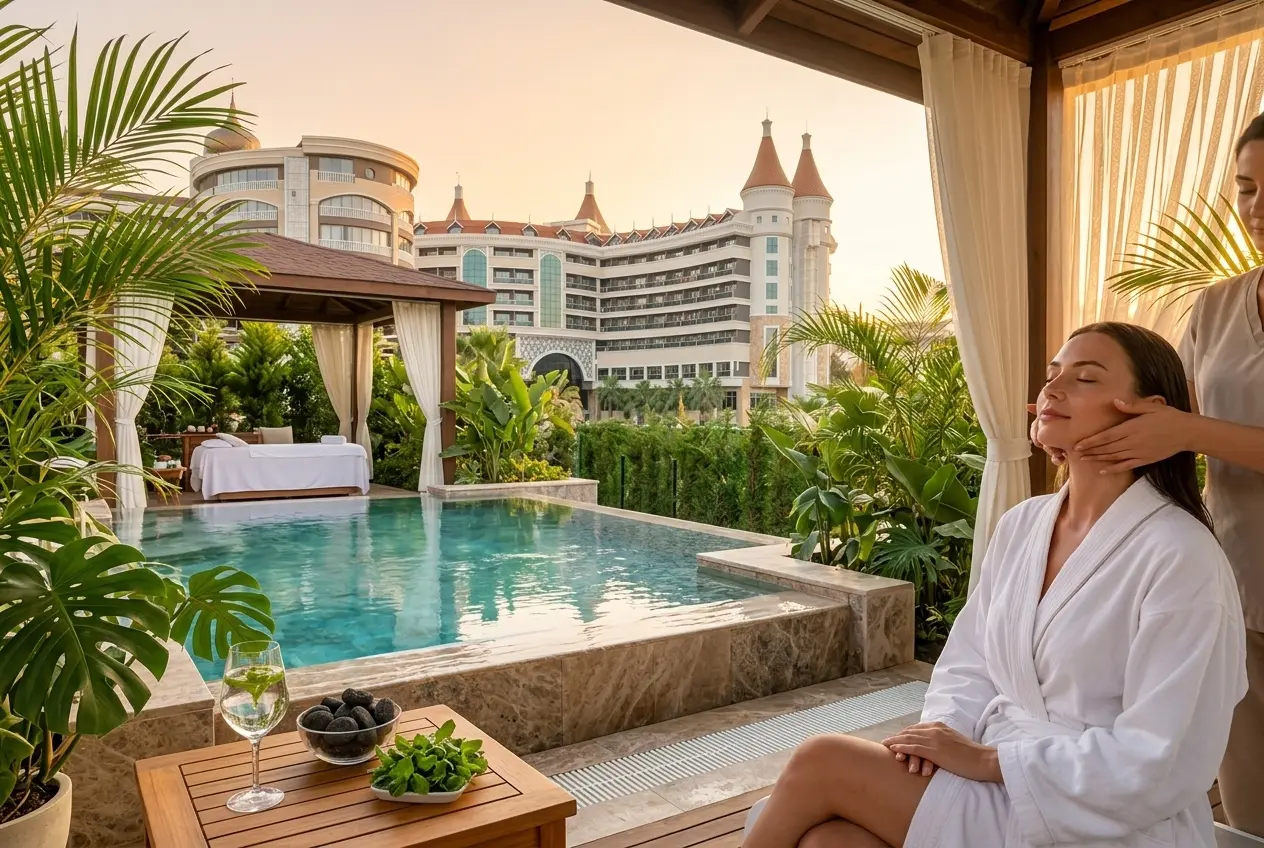 Spring Detox: Renew Your Body and Soul at Kirman Premium SPA
 -
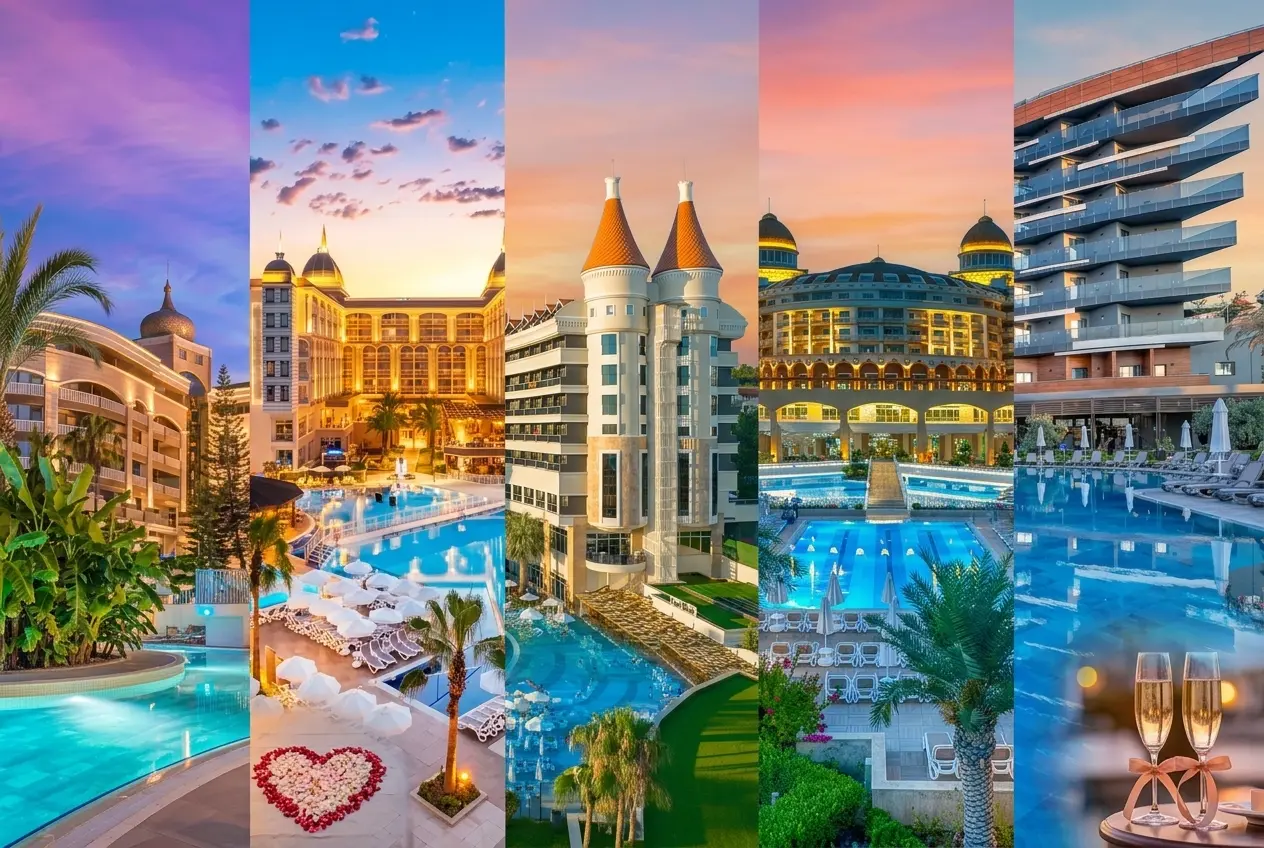 5 Reasons for the Perfect Honeymoon: Kirman Premium Honeymoon Concept
 -
 Antalya's Ancient Cities: A Journey Through Perge, Aspendos & Side
 -
 Kids Are King: Inside the Kichi Kids Club Experience at Kirman Premium
 -
 An Exclusive Holiday Experience with Heated Pools at Kirman Premium!
 -
 Antalya in Summer 2026: Everything You Need to Know (Weather, Prices, Regions)
 -
 Child-Free Holiday in Antalya 2026: Adults Only Hotel Guide & the Sidera Experience
 -
 All-Inclusive Holiday in Side 2026: Region Guide and Best Experiences
 -
 Okurcalar Hotels 2026: Where to Stay in Alanya's Most Peaceful Resort Area
 -
 Kirman Premium Meets Tourism Professionals at ITB Berlin 2026!
 -
 Kirman Premium Hotels Awarded at the Booking.com Traveller Review Awards 2026
 -
 Best Family Hotels with Aquapark in Antalya 2026: Calyptus vs Leodikya
 -
![Kirman Premium 5 Hotel Comparison: Which Resort Is Right for You? [2026]](https://www.kirmanpremium.com/image/icerik/6985529a11cfe.png) Kirman Premium 5 Hotel Comparison: Which Resort Is Right for You? [2026]
Kirman Premium 5 Hotel Comparison: Which Resort Is Right for You? [2026]








Special offers for you Join the Kirman Premium world!







#kirmanpremium


